
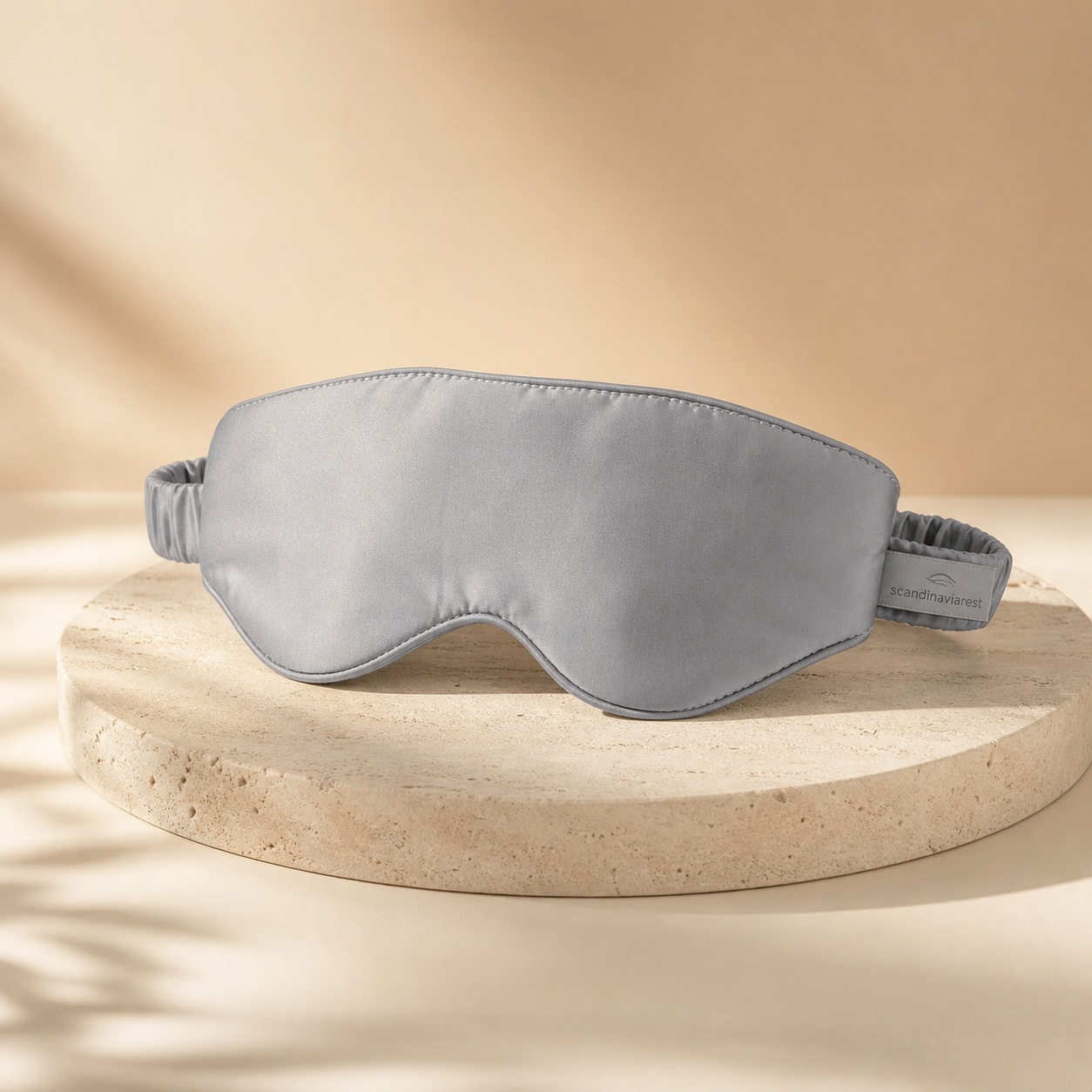
A weighted sleep mask combines light blocking with a small amount of evenly distributed weight around the eye area. The sensation is personal: some people prefer the close fit, while others are more comfortable with a very light, contoured mask.
Weighted mask versus a regular sleep mask
A regular mask mainly blocks light. A weighted version also creates gentle contact around the eyes and temples. Fit matters more than dramatic claims: the mask should remain secure without pressing painfully on the eyelids, nose or ears.
Check weight, strap and sleeping position
Side sleepers should check whether the mask shifts or creates pressure against the pillow. An adjustable strap helps prevent overtightening, and a washable construction makes regular use easier. Try the mask for a short period before wearing it through the night.
When extra pressure is not appropriate
Do not use a weighted eye mask when it causes pain, visual disturbance, numbness or breathing discomfort. Ask a qualified healthcare professional before use after eye surgery or when you have an eye condition, facial injury or another relevant medical concern.
This guide provides general product and comfort information. It is not medical advice and does not replace guidance from a qualified healthcare professional.